

Activity and Movement
Why the Small Things Count
My interest in movement began when a large part of my practice involved treating people with fibromyalgia. Again and again, I saw the same dilemma: too little exercise and my patients felt stiff and weak, but too much, and they suffered from rebound pain and fatigue for several days afterwards.
I found a really great book, Fibromyalgia: Simple Relief Through Movement by Stacie Bigelow. She wrote, “Muscle training is one of the best kept secrets in women’s health.” The reason she said "woman's health" is not to exclude men, but because some women are afraid that weight training may make them look too masculine. That's not true.
Anyway, I'm rambling on. The reason I love this book so much is because Bigelow suggests a specific sequence to move from a sedentary lifestyle to a more active one. First sleep, then activity, and only then exercise. On this page we will examine activity.

Activity is not the same as exercise
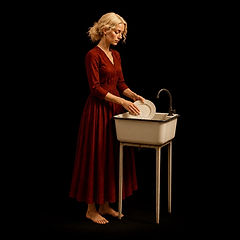
Bigelow suggests working up to at least 60 minutes of activity every day before you begin exercising. Activity is not the same as exercise. Bigelow defines activity as any movement where you are on your feet for a minute or more. It can include getting dressed, making the bed, washing dishes, shopping, walking the dog, tending plants, or moving around while talking on the telephone. It can also include movement performed while sitting or lying down.
I suggest using an app on your smartphone to measure how much activity you do daily. Once you are up to one hour daily you can start gentle stretch exercises.
A NEAT Way to Move
NEAT stands for non-exercise activity thermogenesis. It is the energy the body expends through activity that is not sleeping, eating or deliberate sport-like exercise. A review of NEAT and energy expenditure provides a fuller account of the concept and its development.
Two related terms are worth separating:
-
Non-exercise physical activity (NEPA) is the movement itself.
-
Non-exercise activity thermogenesis (NEAT) is the energy used to perform that movement.
In everyday conversation, people often use “NEAT” to refer to both. Strictly speaking, however, NEAT is not a particular type of exercise and there is no official “NEAT workout.” It is a way of describing the cumulative energy cost of ordinary life.
The term became widely known through the work of Dr James Levine and colleagues. In a landmark 1999 overfeeding study, participants were given extra food for eight weeks. The amount of fat they gained varied substantially, and differences in NEAT explained much of that variation. Some people spontaneously increased small movements, posture changes and daily activity, while others did not.
A later study using posture and movement sensors found that lean participants spent about two more hours per day standing and moving than participants with obesity. This was an association, not proof that standing caused the difference in body weight, but it showed how strongly patterns of ordinary movement can differ between people.
Much of the early NEAT research came from obesity and metabolic medicine. That does not make the concept irrelevant to chronic illness. Its most useful lesson is not that everyone should try to burn more calories. It is that the body's movement across an entire day is biologically meaningful, even when none of it resembles formal exercise.
Why everyday movement matters in chronic illness
Formal exercise receives most of the attention because it is easier to prescribe and study. A programme can specify a duration, intensity and frequency. Daily activity is untidy: it changes with work, symptoms, weather, responsibilities and the design of the home.
Yet ordinary movement may be particularly important when structured exercise is difficult. It can often be divided into very small amounts, woven into necessary tasks and adjusted from one day to the next. It may help preserve mobility, strength, balance, confidence and the ability to carry out daily life. It can also break up long periods spent in one position.
This does not mean NEAT replaces exercise. When a person can tolerate it, appropriately chosen aerobic, strength, flexibility and balance exercise can provide benefits that incidental activity alone may not deliver. The two belong together:
Everyday activity forms the movement foundation; exercise adds a more specific training stimulus when the body is ready for it.
For some people, the foundation must be built—or rebuilt—very gradually.
What fibromyalgia taught me about movement
Fibromyalgia is a useful example because movement can be both helpful and difficult. Pain, fatigue, sleep disturbance and heightened symptom sensitivity can make standard fitness advice feel unrealistic. A person may complete an ambitious workout on a relatively good day and then pay for it with a flare that interrupts activity for several days. This “push-crash” or “boom-and-bust” pattern makes consistency almost impossible.
At the same time, movement remains an important part of fibromyalgia care. The European League Against Rheumatism recommendations identified exercise as the only therapy receiving a strong recommendation based on the evidence they reviewed. The word exercise, however, should not be interpreted as “exercise as hard as possible.” Type, dose and progression matter.
Research has also examined lifestyle activity rather than gym-based exercise. In a randomised trial of adults with fibromyalgia, participants were encouraged to accumulate self-selected, moderate-intensity lifestyle activity in short bouts throughout the day. They increased their daily steps and reported short-term improvements in physical function and pain compared with an education-only group.
The study used a goal of 30 minutes on most days, but that number should not be copied indiscriminately. Its deeper lesson is that movement can be accumulated. It does not always need to happen in one formal session, and people may be more willing to continue activity when they can choose forms that fit their lives.
The same principle can help people with arthritis, persistent pain, cardiometabolic disease and many other long-term conditions. The appropriate amount will differ, as will the need for medical supervision.
Begin with a repeatable baseline
The most useful starting point is not the largest amount a person can manage once. It is the amount they can do with reasonable consistency.
That distinction matters. If someone can walk for 20 minutes only by spending the following day in bed, 20 minutes may demonstrate capacity, but it is not yet a sustainable baseline. A shorter walk that can be repeated without a major increase in symptoms may be more valuable.
This is the basis of pacing: balancing activity and recovery so that movement becomes steadier and less likely to trigger a cycle of overactivity and collapse. The University of Michigan's FibroGuide pacing advice recommends dividing tasks, changing position and finding an individual rhythm rather than waiting until symptoms force a stop.
A practical approach is to:
-
Observe what you currently do on an ordinary day—not your very best day.
-
Choose one small, useful form of movement.
-
Start below the amount that has previously caused a substantial flare.
-
Notice symptoms during the activity, later that day and the following day.
-
Repeat at a tolerable level before considering any increase.
-
Change only one variable at a time: frequency, duration or intensity.
Progress is not always a straight upward line. Maintaining function during a difficult period can be a success. Reducing an activity when symptoms change is not failure; it is responsive self-management.
A special caution: post-exertional malaise
Some people experience more than ordinary exercise soreness or fatigue. Post-exertional malaise (PEM) is a delayed and disproportionate worsening of symptoms after physical, cognitive, emotional or social exertion. It is a defining feature of myalgic encephalomyelitis/chronic fatigue syndrome (ME/CFS) and is also reported by some people with Long COVID and other illnesses.
According to the US Centers for Disease Control and Prevention, PEM may begin 12 to 48 hours after activity and can last for days or longer. This delay makes it easy to misjudge what caused a setback.
For a person with PEM, a standard programme based on fixed, automatic increases may be harmful. NICE guidance for ME/CFS specifically advises against programmes that use predetermined incremental increases in activity. Management should stay within the person's energy limits and be guided by symptoms, ideally with a clinician who understands PEM.
This is one reason broad messages such as “everyone should do 60 minutes a day” need qualification. Population targets are not individual prescriptions, and increasing NEAT is not automatically safe simply because the movement is informal.
Practical ways to increase activity gently
The right choices depend on symptoms, ability, environment and personal goals. These ideas are options, not a checklist:
-
Change position periodically if staying in one position increases discomfort.
-
Stand for part of a familiar task, if standing is safe and well tolerated.
-
Walk briefly during a telephone call.
-
Put away a few items at a time rather than tackling an entire room.
-
Prepare food in stages, alternating standing and sitting.
-
Water one section of the garden today and another tomorrow.
-
Use a higher chair, rail or walking aid when it makes movement safer.
-
Perform gentle ankle, knee, shoulder or hand movements while seated.
-
Take a short, purposeful walk inside the home.
-
Pair a little movement with a regular cue, such as boiling the kettle.
-
Break a necessary journey with planned rest rather than waiting for exhaustion.
-
Choose an enjoyable activity—music, pets, plants or time outdoors—so movement is connected to life rather than punishment.
For someone who is severely limited, rolling over, sitting upright, transferring safely or completing a few comfortable movements may represent meaningful activity. Comparisons with healthy people—or even with one's former self—are rarely helpful.
Monitoring movement without becoming ruled by numbers
A phone, pedometer, smartwatch or activity tracker can help reveal patterns. Consumer devices cannot directly measure NEAT with clinical precision, and systematic reviews have found considerable variation in the accuracy of energy-expenditure estimates. What the devices can provide are useful proxies: steps, time spent moving, standing reminders, heart rate and long periods of inactivity.
For most people, the trend is more useful than the absolute number. A simple diary might record:
-
approximate steps or active minutes;
-
the main activities completed;
-
long periods of sitting or lying;
-
symptoms before and after activity;
-
sleep and recovery;
-
any delayed worsening over the next 24 to 48 hours.
This makes the data clinically meaningful. “I took 3,000 steps” tells us less than “I took 3,000 steps in several short periods, felt stable that evening and had no symptom increase the following day.”
Trackers also have limitations. Wrist devices may mistake arm movement for steps, while some devices undercount very slow walking or walking with an aid. A low number is therefore not a moral judgement or a complete picture of effort. Monitoring should reduce uncertainty, not create anxiety or pressure.
In research and specialist rehabilitation, thigh-worn devices such as activPAL can distinguish sitting or lying from standing and stepping more accurately than a simple step counter. For ordinary clinical work, however, a familiar phone or watch combined with a symptom diary is often the more practical starting point.
Where whole-body vibration may fit
Whole-body vibration platforms are often marketed with images of athletic people performing demanding poses. What first interested me was almost the opposite. I once walked past my wife while she was using a platform in her pyjamas, watching videos on her phone. The device had lowered the practical barrier to movement.
That does not mean vibration requires “zero spoons” or is effortless for everyone. Standing on a moving surface still places demands on the muscles, balance and nervous system. Some people may need to sit, hold a support, use a low setting or avoid the device altogether.
The platform produces rapid oscillations. In response, muscles repeatedly contract to help stabilise the body. Different positions alter which muscles are challenged, but more wobbling or stronger vibration does not necessarily mean a better or safer workout.
The evidence in fibromyalgia is interesting but limited. A small six-week trial published in 2008 found that adding whole-body vibration to an exercise programme improved pain and fatigue more than exercise alone. However, a 2017 Cochrane review judged the evidence to be of very low certainty. A more recent 2025 systematic review and meta-analysis reported possible improvements in fibromyalgia impact, balance and walking capacity, but not clear improvements in pain intensity or overall quality of life. The trials were small and used varied protocols.
I therefore see whole-body vibration as an optional aid, not a treatment everyone needs and not a substitute for ordinary movement or appropriately prescribed exercise. It may suit a person who finds it accessible and tolerable, but it should be introduced cautiously. People with significant balance problems, recent surgery, pregnancy, implanted devices or cardiovascular, neurological or musculoskeletal concerns should obtain individual medical advice before using one.
Activity should support life, not dominate it
The language of fitness can make movement sound like an obligation measured in calories, steps or minutes. For someone with chronic illness, a more compassionate goal is to preserve or expand participation in life.
That may mean being able to prepare a meal, walk to the garden, play with a child, shop with less exhaustion or recover more predictably after an outing. NEAT gives us a technical explanation for why the small movements matter, but the purpose is larger than energy expenditure.
It is to help the body remain involved in living.
My interest in this subject began with fibromyalgia, and the lessons from those patients still guide me: start gently, respect delayed symptoms, value consistency over intensity and never confuse a generic target with an individual plan. As my work has broadened, I have found that these principles apply across many chronic illnesses—provided they are adapted to the person and the condition.
Creating a personalised movement routine
The safest and most useful routine is one built around your present abilities, symptoms, medical needs and daily responsibilities. I can help you review your current activity, recognise patterns of overexertion and recovery, identify a sustainable baseline and combine everyday movement with appropriate stretching, aerobic activity or strength work. Together, we can create a gradual, personalised routine designed to support function and confidence without asking your body to do more than it can safely recover from.
This article provides general education and is not a substitute for individual medical assessment. New or worsening chest pain, fainting, severe breathlessness, neurological symptoms or other concerning reactions to activity require medical attention.
References and further reading
-
Bigelow, S. Fibromyalgia: Simple Relief Through Movement.
-
Centers for Disease Control and Prevention: Strategies to prevent worsening of ME/CFS symptoms
-
Fontaine et al. (2010): Effects of lifestyle physical activity in adults with fibromyalgia
-
Levine et al. (1999): Role of nonexercise activity thermogenesis in resistance to fat gain
-
Levine et al. (2005): Interindividual variation in posture allocation
-
Levine, J. Get Up! Why Your Chair Is Killing You and What You Can Do About It.
-
Macfarlane et al. (2017): EULAR revised recommendations for fibromyalgia management
-
Alentorn-Geli et al. (2008): Whole-body vibration and exercise in women with fibromyalgia
-
Cochrane Review (2017): Whole-body vibration training for fibromyalgia