

Gospel Contemplation
Saint Ignatius of Loyola developed a method of prayer called Gospel Contemplation. Basically, you read a passage from the Bible that includes Jesus. Then, you close your eyes and participate in the scene in your imagination, as if you were there.
What is Gospel Contemplation?
In the Fourth Week of the Spiritual Exercises, Ignatius offers specific guidance for contemplating the life of Christ, encouraging individuals to use their senses and imagination to enter into the scenes described in the Gospels.

"I will see the various places, Bethlehem, Nazareth, the desert, the sea, the garden, etc. I will hear the conversations, the preaching, the birds, the animals. I will observe everything in such a way that if I were actually there, I would be moved by compassion, by sorrow, and by gladness. In this way, with the proper dispositions, I will grow in imitation of Christ our Lord."

Who was
Ignatius of Loyola?
Ignatius of Loyola (1491-1556) was a Spanish priest and theologian who founded the Society of Jesus (Jesuits). Born Íñigo López de Loyola in the Basque region of Spain, he initially pursued a military career. After being seriously wounded in the Battle of Pamplona in 1521, Ignatius experienced a profound spiritual conversion during his convalescence. He read religious texts, particularly the lives of the saints and the life of Christ, which inspired him to dedicate his life to God.
Following his recovery, Ignatius undertook a period of intense prayer and penance, culminating in a mystical experience at Manresa, which significantly shaped his spiritual outlook. He later wrote the "Spiritual Exercises," a manual for spiritual development and discernment, which became foundational for Jesuit training.
Ignatius was canonized as a saint by Pope Gregory XV in 1622, and his feast day is celebrated on July 31. His life and teachings continue to inspire millions, and the Jesuits remain one of the most influential religious orders in the Catholic Church.


How to do
Gospel Contempation
Select a passage
Select a passage from one of the Gospels which involves Jesus. Read the passage at least twice so that you become familiar with the details of the story. Let’s use the anointment of Jesus in Bethany as an example.
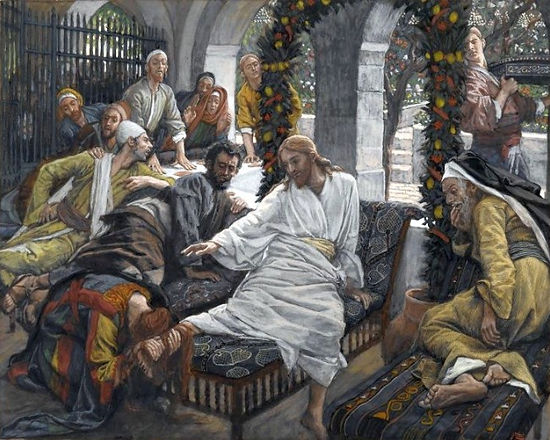
When Jesus was in Bethany at the house of Simon the leper, a woman came to him with an alabaster jar of very expensive ointment, and she poured it on his head as he sat at the table. Matthew 26:6–13

But when the disciples saw it, they were angry and said, ‘Why this waste? For this ointment could have been sold for a large sum, and the money given to the poor.’ But Jesus, aware of this, said to them, ‘Why do you trouble the woman? She has performed a good service for me. For you always have the poor with you, but you will not always have me. By pouring this ointment on my body she has prepared me for burial. Truly I tell you, wherever this good news is proclaimed in the whole world, what she has done will be told in remembrance of her.’

Close your eyes and imagine you are in the scene
Use your senses of sight, hearing, taste, touch, and smell to make the scene come alive. Picture the woman kneeling before Jesus, her eyes filled with love and devotion. See the glistening oil in the alabaster jar, catching the light as it pours onto Jesus' feet. Notice the expressions on the faces of those present, each reflecting a unique response to this intimate act of love.
John 12:3 mentions the type of oil. “Then Mary took about a pint of pure nard, an expensive perfume; she poured it on Jesus’ feet and wiped his feet with her hair. And the house was filled with the fragrance of the perfume.”
Nard is an essential oil made from the roots of the spikenard plant. This plant grows in the Himalayan Mountains, and it only grows above 30,000 feet, so in the time of Jesus it was very expensive. I actually bought a 5ml bottle and it does have a wonderful smell. It’s earthy, musky, and somewhat flowery. There’s a hint of ginger. Nard, or Spikenard is a pale yellow or amber-coloured liquid with a heavy, sweet-woody, spicy-animal odour, somewhat similar to Valerian oil.

Engage Your Senses
Imagine the texture of the oil as it flows from the jar and onto Jesus' skin. Visualize the colors and details of the room, allowing your imagination to fill in the finer aspects of the scene. Inhale deeply, immersing yourself in the fragrance of the spikenard oil. Let the aroma fill your senses, evoking a sense of the sacred and the profound.

Feel the Emotions
Step into the emotions of the characters. Sense Mary's reverence and love as she anoints Jesus' feet. Reflect on the depth of gratitude and humility in Jesus' gaze as he accepts this act of devotion. Contemplate the reactions of the bystanders, each experiencing a unique blend of surprise, wonder, and perhaps even jealousy.


Engage in Dialogue
Take some time to talk with Jesus about what you have felt and experienced. Talk with him as with a friend, sharing and listening. Ask him questions and listen carefully to his reply.
Write down your thoughts
St. Ignatius recommends that we write down our experience. A written review enables us to look back on our experience, and to notice what happened. It allows us to be fully present to our experience of contemplation. It’s also a precious record of our journey with God, which nourishes wholeness and integration.


I’m Dr. Rodger Douglas, DMH, a South African-born homeopath now based in Osaka, Japan. With a psychology degree from Nelson Mandela University and a diploma from the Hahnemann College of Heilkunst, I specialize in holistic care for fibromyalgia. I serve clients by phone or video across the US, Canada, the UK, and beyond, shipping remedies directly from Japan.