
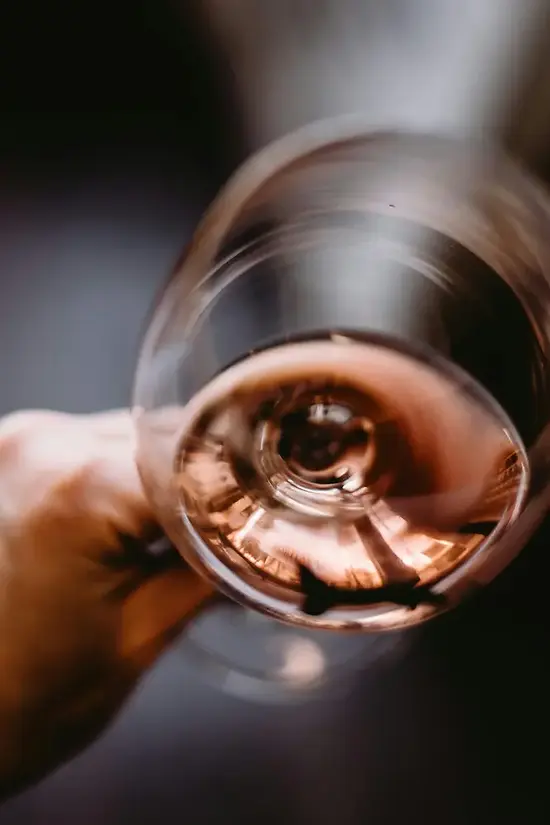
Enhancing Your Sense of Taste
Have you ever thought about harnessing your sense of taste to deepen your present-moment awareness? While mindfulness is typically associated meditation, in this article, we will utilize our taste buds as a pathway to greater mindfulness.
So, what is taste exactly?
Tasting goes far beyond the physical act of tasting. We explore the two facets of taste: the sensory experience and the concept of "good taste" or discernment. The word taste comes from Old French word 'taster' and means to taste, to sample by mouth, to enjoy, to feel, touch, pat, or stroke" (12c., Modern French tâter), from Vulgar Latin *tastare, apparently an alteration (perhaps by influence of gustare) of taxtare, a frequentative form of Latin taxare "evaluate, handle" (see tax (v.)). Meaning "to take a little food or drink" is from c. 1300; that of "to perceive by sense of taste" is recorded from mid-14c. Of substances, "to have a certain taste or flavor," it is attested from 1550s (replaced native smack (v.3) in this sense). Another PIE root in this sense was *geus- "to taste; to choose."
The Hindus recognized six principal varieties of taste with sixty-three possible mixtures ... the Greeks eight .... These included the four that are now regarded as fundamental, namely 'sweet,' 'bitter,' 'acid,' 'salt.' ... The others were 'pungent' (Gk. drimys, Skt. katuka-), 'astringent' (Gk. stryphnos, Skt. kasaya-), and, for the Greeks, 'rough, harsh' (austeros), 'oily, greasy' (liparos), with the occasional addition of 'winy' (oinodes). [Carl Darling Buck, "A Dictionary of Selected Synonyms in the Principal Indo-European Languages," 1949]
Sense of "to know by experience" is from 1520s. Related: Tasted; tasting. Taste buds is from 1879; also taste goblets.
also from c. 1300
taste (n.)
early 14c., "act of tasting," from Old French tast "sense of touch" (Modern French tât), from taster (see taste (v.)). From late 14c. as "a small portion given;" also "faculty or sense by which the flavor of a thing is discerned;" also "savor, sapidity, flavor."
Meaning "aesthetic judgment, faculty of discerning and appreciating what is excellent" is first attested 1670s (compare French goût, German geschmack, Russian vkus, etc.).
Of all the five senses, 'taste' is the one most closely associated with fine discrimination, hence the familiar secondary uses of words for 'taste, good taste' with reference to aesthetic appreciation. [Buck]
Taste is active, deciding, choosing, changing, arranging, etc.; sensibility is passive, the power to feel, susceptibility of impression, as from the beautiful. [Century Dictionary]
While there are no specific exercises designed to enhance your sense of taste, there are activities you can incorporate into your routine that can help train and sharpen your taste buds. Here are a few suggestions:
Taste testing:
Engage in taste testing sessions where you sample different flavors, such as various fruits, spices, or beverages. Focus on identifying the specific tastes and aromas associated with each item. Try blindfolded taste tests to rely solely on your taste buds and sense of smell.
Food pairing:
Experiment with food pairing to explore how different flavors complement or contrast with each other. For example, try combining sweet and savory, spicy and sweet, or sour and salty tastes to enhance your understanding of flavor combinations.
Sensory meditation: Practice mindful meditation with a specific focus on your sense of taste. Take a small piece of food, like a raisin or a piece of chocolate, and slowly savor it. Pay attention to the textures, flavors, and sensations that arise as you chew and swallow. This can help you become more aware of the subtleties in taste.
Cooking and recipe experimentation: Engage in cooking and recipe experimentation to become more familiar with different ingredients, spices, and flavors. This hands-on approach allows you to explore how various combinations of ingredients affect taste and develop your palate.
Chewing and savoring food: Take the time to thoroughly chew your food and savor each bite. This practice allows the flavors to fully develop and stimulates your taste buds more effectively. Avoid rushing through meals and make an effort to be present in the eating experience.
Mindful spice exploration: Explore different spices and herbs by tasting them individually. Start with small amounts and gradually increase as you become accustomed to the flavors. Pay attention to the unique tastes and aromas of each spice, and try to identify the specific characteristics.
Taste memory exercises: Engage in taste memory exercises by trying to recall and describe the flavors of foods you've eaten in the past. This can help you develop a more detailed and nuanced understanding of taste sensations.
Sensory evaluation exercises are designed to enhance your ability to discern and evaluate sensory attributes such as flavors, aromas, textures, and appearances. Here are some steps to conduct sensory evaluation exercises:
-
Select a range of samples: Choose a set of samples you want to evaluate. It can be wines, foods, beverages, or any other sensory product you wish to focus on.
-
Set up a controlled environment: Create a controlled environment with minimal distractions. Ensure good lighting, proper ventilation, and a neutral background to minimize external influences on your sensory perception.
-
Use blind or single-blind tasting: Conceal the identity of the samples to eliminate biases and preconceived notions. You can cover the labels or use opaque containers to ensure you're unaware of the samples' identities during the evaluation. Alternatively, in single-blind tastings, have someone else handle and pour the samples without revealing the information to you.
-
Observe the appearance: Start by examining the appearance of the samples. Note the color, clarity, intensity, and any other visual attributes that may be relevant. Take into account the specific characteristics associated with the product you're evaluating (e.g., wine color, foam in beer, etc.).
-
Evaluate the aroma: Bring the sample close to your nose and inhale gently to assess the aroma. Pay attention to the intensity, complexity, and specific aromas present. Try to identify different scent components and note any positive or negative attributes.
-
Assess the taste: Take a small sip or bite of the sample and allow it to coat your entire mouth. Focus on the taste sensations, including sweetness, acidity, bitterness, saltiness, and umami. Analyze the intensity, balance, and aftertaste. Consider the overall flavor profile, complexity, and any specific flavor characteristics.
-
Evaluate the texture: For certain products, texture is an important sensory attribute. Assess the mouthfeel, consistency, viscosity, astringency, and other textural elements. Consider how the texture complements or detracts from the overall experience.
-
Record your observations: Maintain a systematic record of your observations. Use a sensory evaluation form or a notebook to document your findings. Include detailed descriptions of the appearance, aroma, taste, and texture, as well as any specific attributes you notice.
-
Compare and contrast: If you're evaluating multiple samples, make comparisons between them. Assess the similarities, differences, and preferences among the samples. Look for nuances, variations in intensity, or other distinct characteristics that set them apart.
-
Repeat and practice: Engage in regular sensory evaluation exercises to train your senses and develop your sensory memory. The more you practice, the more sensitive and discerning your senses become.
It's worth noting that there are specific methodologies and techniques for sensory evaluation, such as the descriptive analysis method or specific tasting protocols used in wine or coffee industries. These approaches provide more structured frameworks for sensory evaluation exercises. If you're interested in a particular field, you may consider exploring those methodologies for more in-depth guidance.
Remember that sensory evaluation exercises require focus, concentration, and attention to detail. With practice, you can refine your ability to perceive and articulate sensory attributes, leading to a more comprehensive evaluation of various products.

Contemplating an orange
This simple mindfulness exercise from the 1960s. Hold an orange in your hand, close your eyes, and tune into your senses of touch and smell.
The method
Hold an orange in the palms of your hands and close your eyes (or use a blindfold). Turn off your sense of sight and tune into touch and smell. With your fingertips feel the orange's shape, texture, weight, and temperature. Try to detect markings and bumps.
Bring the orange to your face and gently roll it over it. Use your skin to observe the orange. Is it warm or cool? Is it rough or smooth? What emotions or memories come up?
Keeping your eyes closed peel the orange, and then hold the peel against your face. Take in its smell. Notice the differences between the rind and the pith. Reverse direction. Instead of perceiving the orange with your face, become aware of your face through the orange. Feel your skin. Explore the contours of your face.
Break the orange up into sections. Bring a section up close to your nose. Lose yourself in its scent. With the gentlest of all touches slowly stroke the section along your cheek.
Eat the orange.
I discovered this exercise in Sense Relaxation: below your mind by Bernard Gunther. This book was published in 1968 and has a groovy sixties feel to it. Gunther’s loopy style of writing and deliberate misspellings bring a feeling of lightness and sensuality to mindfulness. Something you don’t find much in the literature on the topic nowadays.
I believe Gunther‘s orange meditation, which he called Orange A-Peeling, is the original raisin meditation. By the way, my version and his are quite different in that mine is done with the eyes closed throughout the exercise. Do try this exercise with other fruits and foods. If you don’t mind a bit of mess on your face and hands, then ice cream is an enjoyable option to try. Have fun.
Related Articles


I’m Dr. Rodger Douglas, DMH, a South African-born homeopath now based in Osaka, Japan. With a psychology degree from Nelson Mandela University and a diploma from the Hahnemann College of Heilkunst, I specialize in holistic care for fibromyalgia. I serve clients by phone or video across the US, Canada, the UK, and beyond, shipping remedies directly from Japan.